
AI supports decisions when the data supports the question
AI learns patterns from data; it does not automatically understand an entire industrial process. Start with a defined task such as reading existing values, screening visible defects or prioritizing review. If the required information is absent, add measurement or change the method rather than expecting a model to guess.
Inspection images vary with products and light. Condition monitoring also needs operating load and maintenance context. Finding an anomaly does not automatically establish its cause or remaining life. Observation, screening and diagnosis are separate responsibilities.
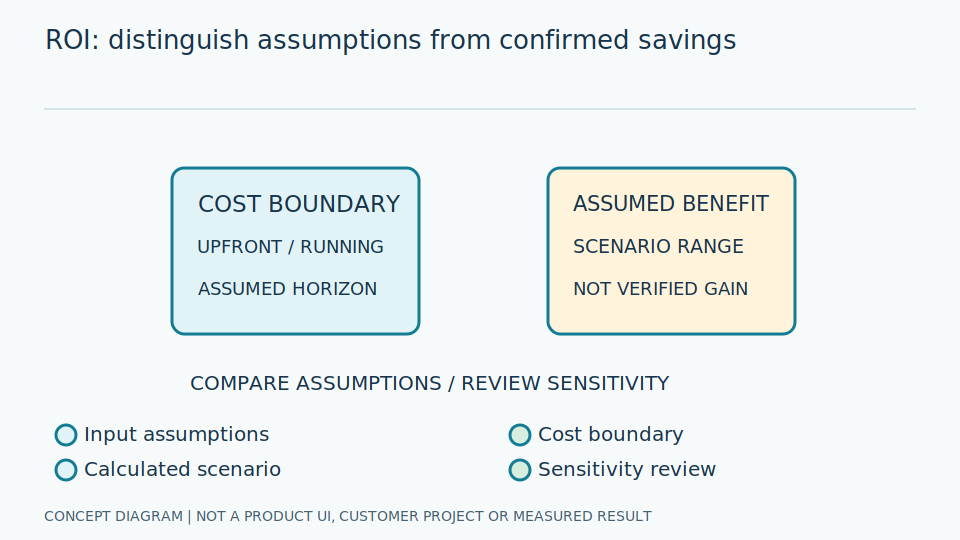
Illustrative benefits and figures are not universal guarantees. Measure results against the actual baseline, data and agreed scope. Simple rules or existing sensors may be more appropriate than AI, so compare alternatives before investing.
From experimentation to a dependable work system
Collect varied examples and reproducible reference answers, keeping development and evaluation separate. Adjacent frames can inflate apparent performance. State which tasks or conditions lack sufficient examples rather than claiming coverage of every situation.
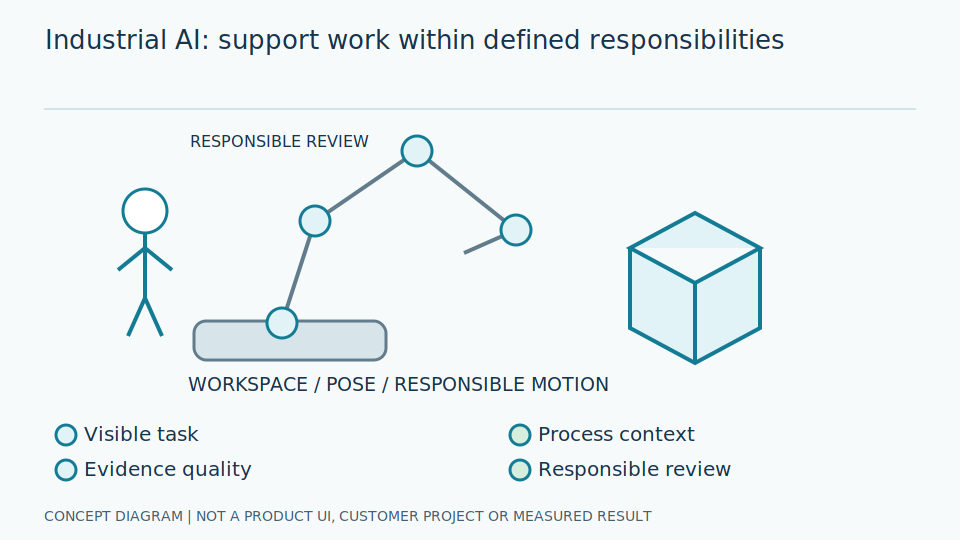
Send results with validity and timestamps. Users need to see unreadable or stale states, not only ordinary values. Tasks involving people or machine commands require explicit permissions, reviewers and responsibilities before operation.
Monitor changing images and data after deployment, including camera, runtime and model changes. Revalidation depends on risk. Standards and risk-management frameworks organize the approach; they do not automatically certify a product or organization.