
Automatic Barcode
& QR Code Scanner
AI system that scans and decodes multiple barcodes and QR codes simultaneously from cameras for warehouses, production lines, and retail.

Usage Context and Data Preparation
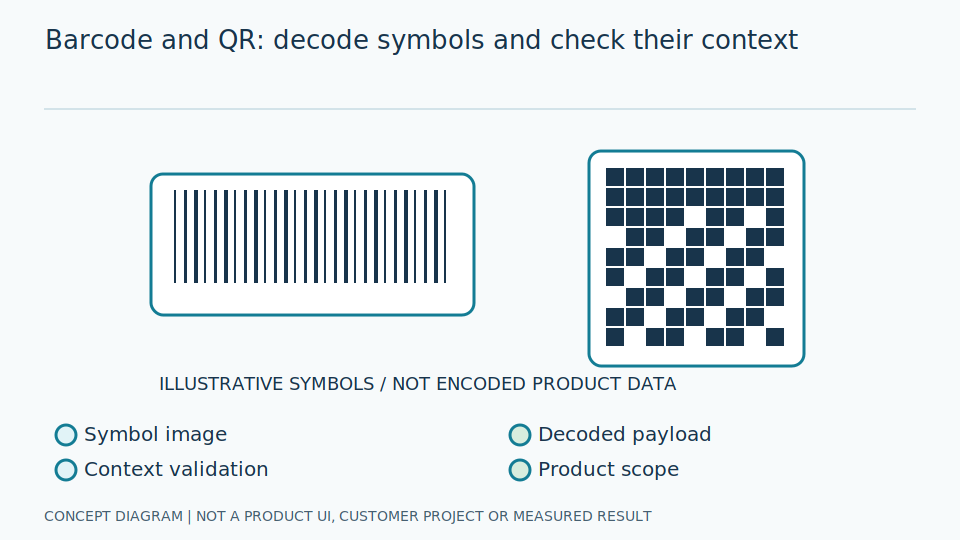
One-dimensional barcodes and two-dimensional codes encode data differently. Decoded text may identify a product, batch or another workflow reference. When multiple codes appear in one image, establish which belongs to which item before sending records to inventory or ERP.
Prepare actual labels, code types, positions on products and images captured as items pass the camera. For conveyors, describe item arrangement and duplicate-reading handling. Review label legibility alongside whether the decoded content matches the data that should appear on the product.
Decoding reveals symbol content but does not confirm it belongs on that item. Separate successful decoding, structure validation and comparison with product or lot references. Each failure has a different meaning and should be explained to the user explicitly.
Symbol size, pixels per module, surrounding quiet zones and sharpness affect decoding. Film reflections and movement can remove detail. Test actual new, damaged and differently positioned labels rather than treating a large sharply printed QR code as representative of every label.
Multiple codes require explicit selection and item association. A neighboring label can decode correctly but be wrong for the task. Use positions or events and distinguish repeated frames of one item from multiple items intentionally sharing the same product code.
QR content may be a URL or command interpreted by another system. Treat it as input data; do not automatically follow links or perform actions beyond authorized scope. ERP/WMS posting requires type, structure and permission checks, not successful decoding alone.
Evaluate complete item coverage, text accuracy and correct association. Standards-based print grading is a separate measurement task requiring appropriate methods and equipment. Decoding with an ordinary camera does not certify print quality or establish that an item is genuine.
Duplicate checks, lot verification and sorting commands are proposals requiring scope and joint trials, not confirmed released features. Provide review for missing or unreadable labels. Do not post empty text as a normal result merely to make a data stream appear continuous.
Key Features
Multi-code Scanning
Scan multiple barcodes in a single frame — no one-by-one scanning needed.
All Formats Supported
Supports 1D Barcode (Code 128, EAN, UPC) and 2D (QR Code, Data Matrix, PDF417).
Standard Camera
No specialized scanner needed — works with IP cameras or webcams.
Conveyor-mounted
Install above conveyor belts for automatic scanning without stopping the line.
WMS/ERP Integration
Automatic data entry into warehouse or ERP systems — no manual keying.
Barcode Quality Check
Verify barcode print quality before shipping products.
Scroll the diagram horizontally to inspect all details.
Key Benefits
Faster Than Handheld
Scan multiple codes in under 1 second.
Error Reduction
No manual data entry — eliminates human error.
Lower Equipment Cost
Use cameras instead of expensive dedicated scanners.
Full Traceability
Track products throughout the entire supply chain.
Technical Specifications
| Item | Specification |
|---|---|
| Accuracy | > 99% |
| Scan Speed | < 200ms per code |
| Codes per Frame | Up to 20 barcodes |
| Supported Formats | 1D, 2D, QR, DataMatrix |
| Supported Cameras | Webcam, IP Camera |
| Integration | REST API, WebSocket |
Suitable For
Related articles and knowledge
Vision AI Knowledge Library
Start with image interpretation, event information and evidence-backed retrieval.
Read MoreDetection and Event Indexing
Define identifiers, time, attributes and data lifecycle before choosing an index.
Read MoreNatural-Language Search
Separate objects, attributes, relationships and questions requiring confirmation.
Read MoreHybrid and Multimodal Retrieval
Combine filters and vectors without assuming similarity proves every condition.
Read MoreSearch Evaluation and Governance
Evaluate relevance, evidence, permissions and information missing from an index.
Read MoreRelated Content

Face Detection & Recognition System
AI-powered face detection and recognition system for access control and security.

License Plate Recognition (LPR) System
Automatic license plate reading system for parking management and vehicle access control.
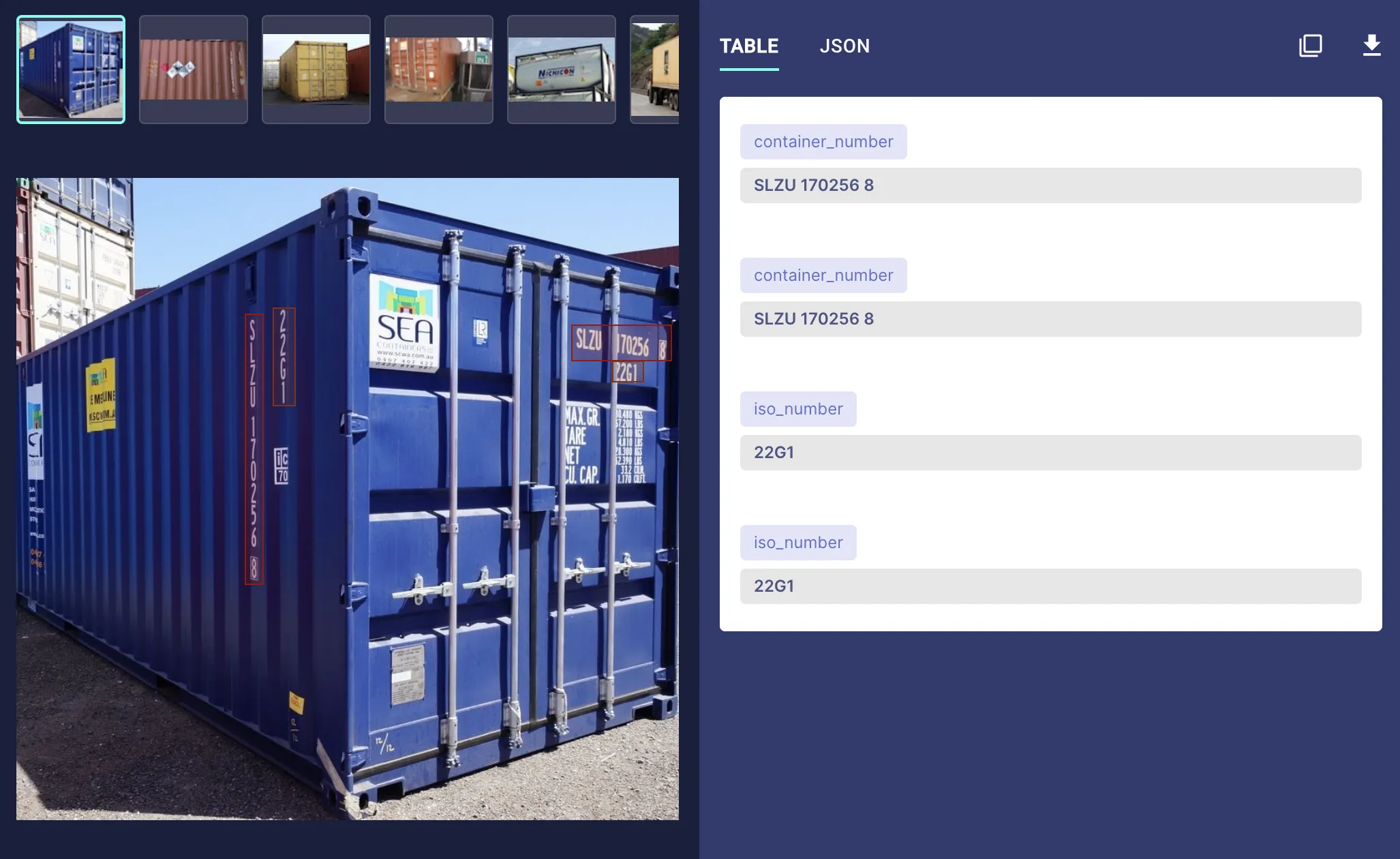
Container Code Recognition System
Automatic container code reading system for logistics and port terminal management.
Interested in AI Vision for Your Organization?
Contact us for a free consultation and live system demo.