
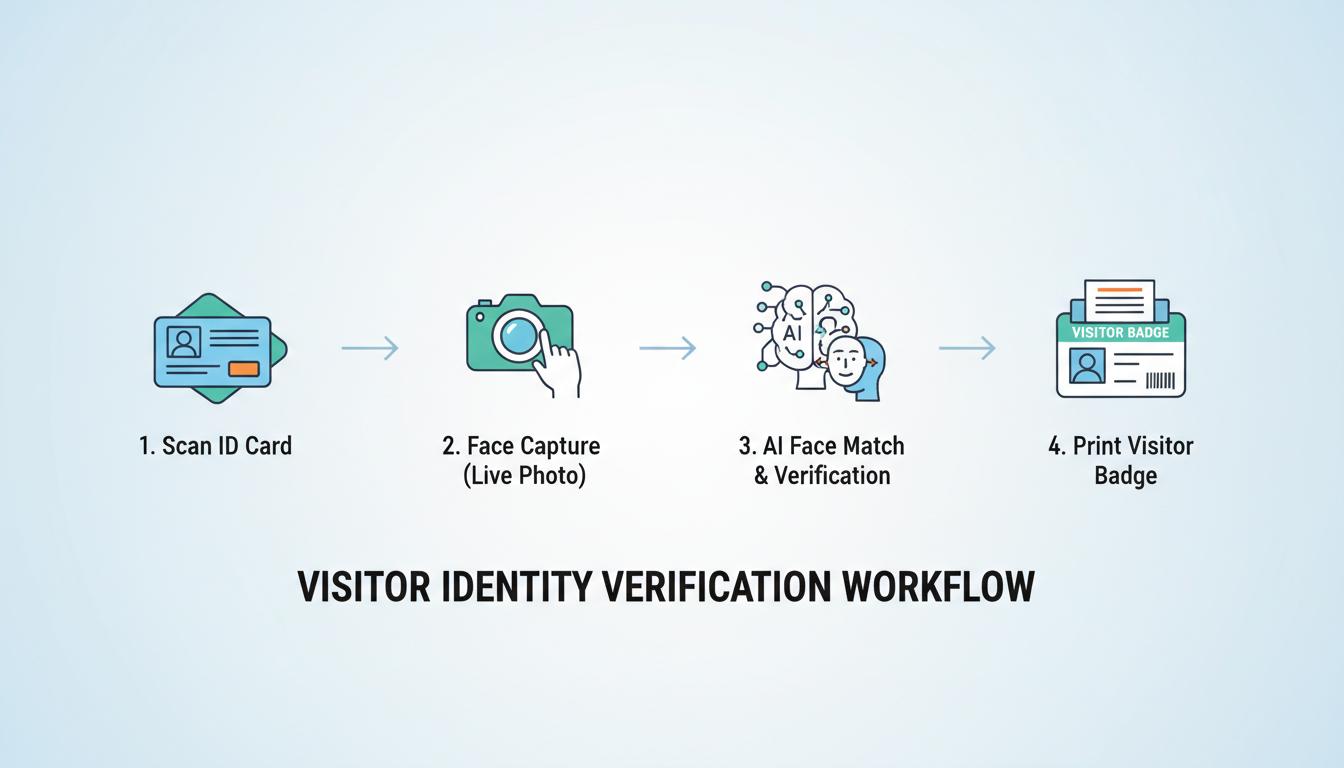
Principles, Scenarios and Suitability
Visitor registration and regulated KYC have different scopes. OCR can transcribe necessary fields, but does not verify authenticity, identity or legal compliance. Minimise data collection and do not infer sensitive traits.
Visitor registration collects information for a visit; KYC means knowing customers under a specific purpose and requirements, not a general name for document scanning. OCR only transcribes images. Ask what information is necessary for a visit rather than copying every field. Correctly reading a name proves neither that the holder owns the document nor that it is authentic, and cannot score personal trustworthiness.
Identity proofing needs methods and accountable personnel appropriate to the task. Minimisation reduces data consequences while still meeting the real purpose. Separate spelling checks from visit approval. Provide alternatives for unreadable documents and people unable to use digital routes. Never infer visitors' health, ethnicity, emotion or risk from facial information.
Scroll the diagram horizontally to inspect all details.
Illustrative Design Scenario
Illustrative design scenario: visitors can enter necessary details or ask staff to read a document. Reviewers see only visit-related fields, rather than copying every field or building a risk profile from a face.
Suppose an appointed visitor has a reflective document with an incompletely read name. Staff should permit entry of details or assist through approved checks, not deny rights because OCR scores are low. Confirming an appointment with the host checks visit purpose, not document authenticity, and must not automatically be called passing KYC.
Options include using existing appointment information instead of keeping a copy, or collecting only necessary fields for the owner to check. The first minimises data but requires reliable appointments; the second needs access and retention design. Test with simulated information or authorised documents with excess details concealed. Reviewers should confirm deletion, not expand datasets with real documents without necessity.
Inputs and Prerequisites
Specify purpose, required fields, processing basis, retention, reviewer permissions and actual organisational requirements. If identity proofing is needed, define an appropriate separate process and responsible personnel.
Each field has a specific meaning: state why it is collected and who uses it. Keep policy revisions and correction routes. Do not include sensitive fields simply because they appear on a photographed document.
Results should be draft registration details, appointments and staff-review status, including unreadable portions. Exclude trustworthiness scores or legal-compliance conclusions from images. Restrict access according to actual responsibilities.
Trial and Integration Workflow
- 1Separate visitor registration from KYC steps with specific regulatory requirements.
- 2Transcribe necessary fields and let the visitor or staff verify them.
- 3Confirm appointment permissions and delete records at the defined retention deadline.
Evaluation and Acceptance Criteria
Check field accuracy, access restrictions and expiry-based deletion. Test unreadable documents and inclusive alternatives. An OCR score must not become a trustworthiness score or a conclusion that someone has passed KYC.
Compare raw text and corrections, testing accounts that should not see individual information. Trial retention expiry and deletion in a test system, including generated copies. Removal from a screen does not mean deletion from every data source.
Visitors and staff should trial incorrect names, absent appointments and unusable images. Check clear correction routes and accountability. Acceptance includes effects on rights, not registration speed at the expense of necessary review.
Scroll the diagram horizontally to inspect all details.
Failure Cases and Limitations
Copies may be inauthentic and clear documents do not prove the holder owns them. Verification requirements vary by purpose. This content certifies no compliance, permits no health, ethnicity or sensitive-trait inference, and requires human review for rights-affecting cases.
Text extracted from an image remains personal data, requiring protection of purpose and rights like the original. Encryption does not justify keeping every field without necessity assessment. Reading errors do not establish that visitors supplied false information.
Identity standards guide study, not certify organisational processes. Future proofing or external-database integration needs renewed scope and rights assessment, not claims of ready-to-use KYC or existing legal compliance.
Practical Checklist
- Is collection limited to data necessary for the stated purpose?
- Is an alternative available when documents cannot be read?
- Are OCR results kept distinct from claims of passing KYC?