
Face Detection
& Recognition System
AI system for real-time face detection and recognition for area access control, time attendance, and organizational security.
Usage Context and Data Preparation
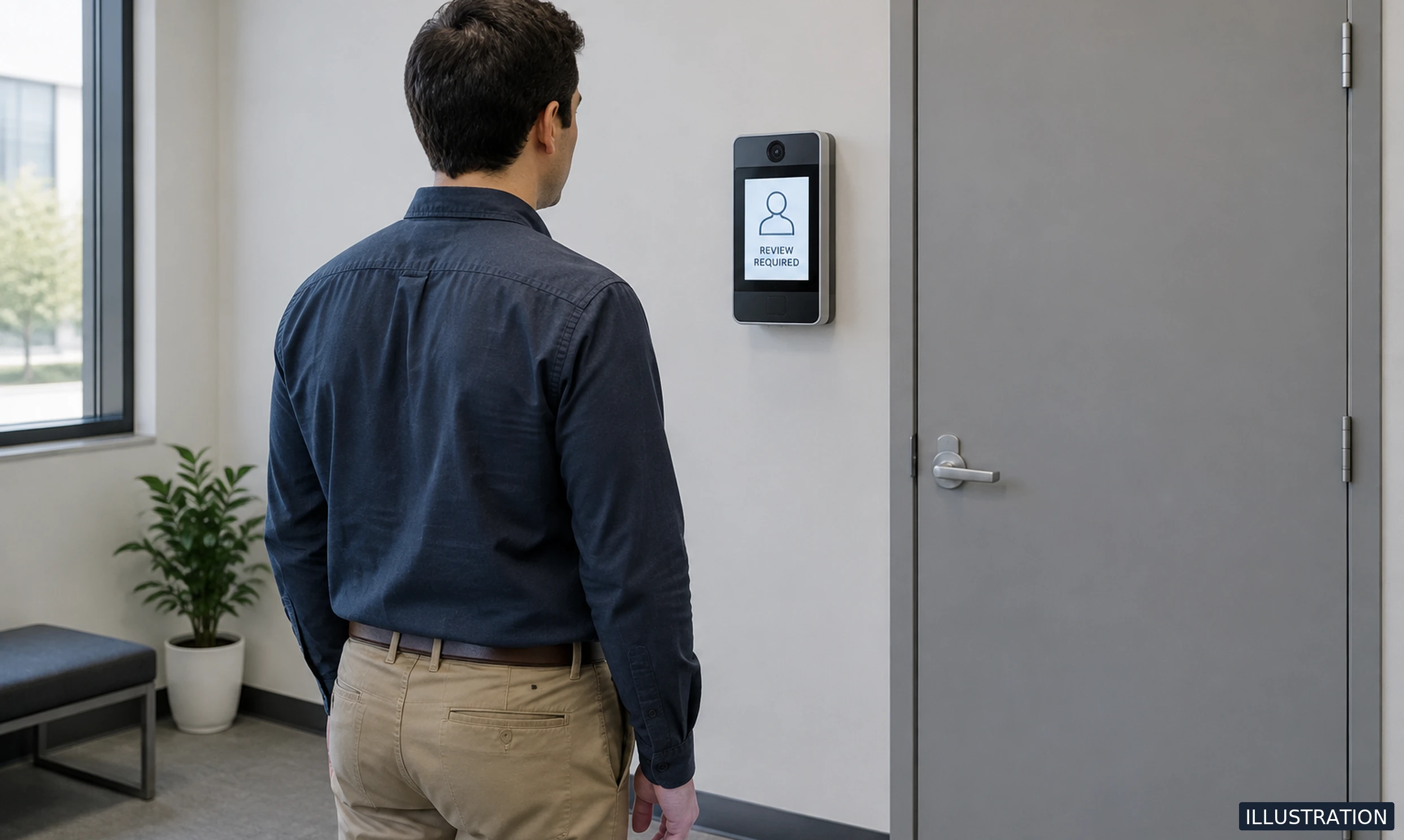
Face detection identifies whether faces are present and where they appear. Recognition compares detected faces with an employee database. Attendance and access-control use should therefore specify which result is needed and who reviews cases where no match is found.
Before discussing deployment, identify entry points, existing cameras, lighting and how people are associated with access permissions. Prepare examples only with appropriate authorisation. Distinguish face detection, identity matching and door-opening events so records from each stage can be reviewed with the correct meaning.
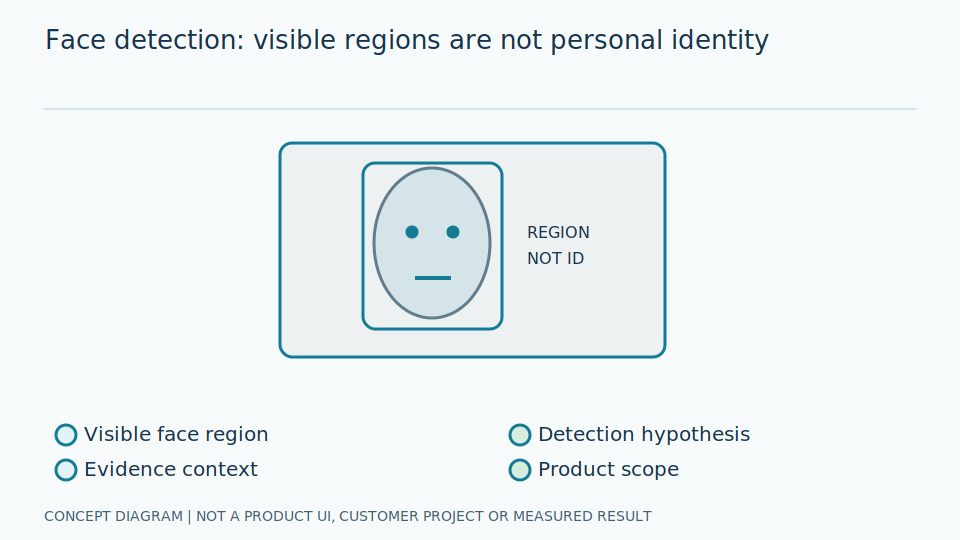
Design must distinguish detection from recognition. Detection locates a face; recognition needs reference records and matching rules. Finding a face does not establish an authorized identity and should not trigger attendance or door actions without separately confirmed workflow scope.
Quality depends on face size, angle, movement, lighting and obstruction. A frontal demonstration differs from people walking through a door. Use authorized examples across conditions, including cases requiring rejection or review rather than a forced nearest-person match.
Integration with personnel or access systems needs user identity, events, time and match status separate from face detection. Multiple frames of one passage need event grouping and duplicate prevention tested with the receiver. Face counts cannot substitute for entry-event counts.
Matching evaluation must distinguish accepting the wrong person from rejecting an authorized person. Detection has its own missed and false detections. A score at one stage does not validate another, and model confidence is not automatically a calibrated probability of correctness.
Personal imagery needs an actual purpose, access boundaries and appropriate handling. Retain necessary information and provide a correction route. Face detection does not establish emotion, intent or personal characteristics; AI functionality does not certify compliance with legal or organizational requirements.
Liveness checks, roster management or permission integration are proposals requiring confirmed scope and trials, not existing features inferred from this explanation. The workflow needs alternatives when observations are unreadable so users can continue without depending on a single uncertain image result.
Key Features
Real-time Face Detection
Detect multiple faces simultaneously from CCTV or IP cameras at high speed.
Face Recognition
Match faces against employee database for automatic identification with >99% accuracy.
Access Control
Automatic door control based on face recognition, replacing cards or fingerprint scanners.
Logging & Reports
Record every entry/exit with photos, timestamps, and locations for historical review.
Unknown Person Alerts
Instant alerts when unregistered persons or blacklisted individuals are detected.
Works in Any Lighting
Supports IR cameras for detection even in dark or low-light conditions.
Scroll the diagram horizontally to inspect all details.
Key Benefits
Safer Than Cards
Cannot be forged, lost, or shared with others.
Faster Than Legacy
Identity verification in under 0.3 seconds — no stopping required.
Reduced Costs
No cards to issue, no scanner maintenance costs.
Complete Data
Real-time entry/exit statistics and behavior reports.
Technical Specifications
| Item | Specification |
|---|---|
| Accuracy | > 99.5% |
| Detection Speed | < 300ms |
| Simultaneous Faces | Up to 50/frame |
| Face Database | Unlimited |
| Supported Cameras | IP Camera, CCTV (RTSP/ONVIF) |
| Integration | REST API, MQTT, Webhook |
Suitable For
Related articles and knowledge
Vision AI Knowledge Library
Start with image interpretation, event information and evidence-backed retrieval.
Read MoreDetection and Event Indexing
Define identifiers, time, attributes and data lifecycle before choosing an index.
Read MoreNatural-Language Search
Separate objects, attributes, relationships and questions requiring confirmation.
Read MoreHybrid and Multimodal Retrieval
Combine filters and vectors without assuming similarity proves every condition.
Read MoreSearch Evaluation and Governance
Evaluate relevance, evidence, permissions and information missing from an index.
Read MoreRelated Content

License Plate Recognition (LPR) System
Automatic license plate reading system for parking management and vehicle access control.
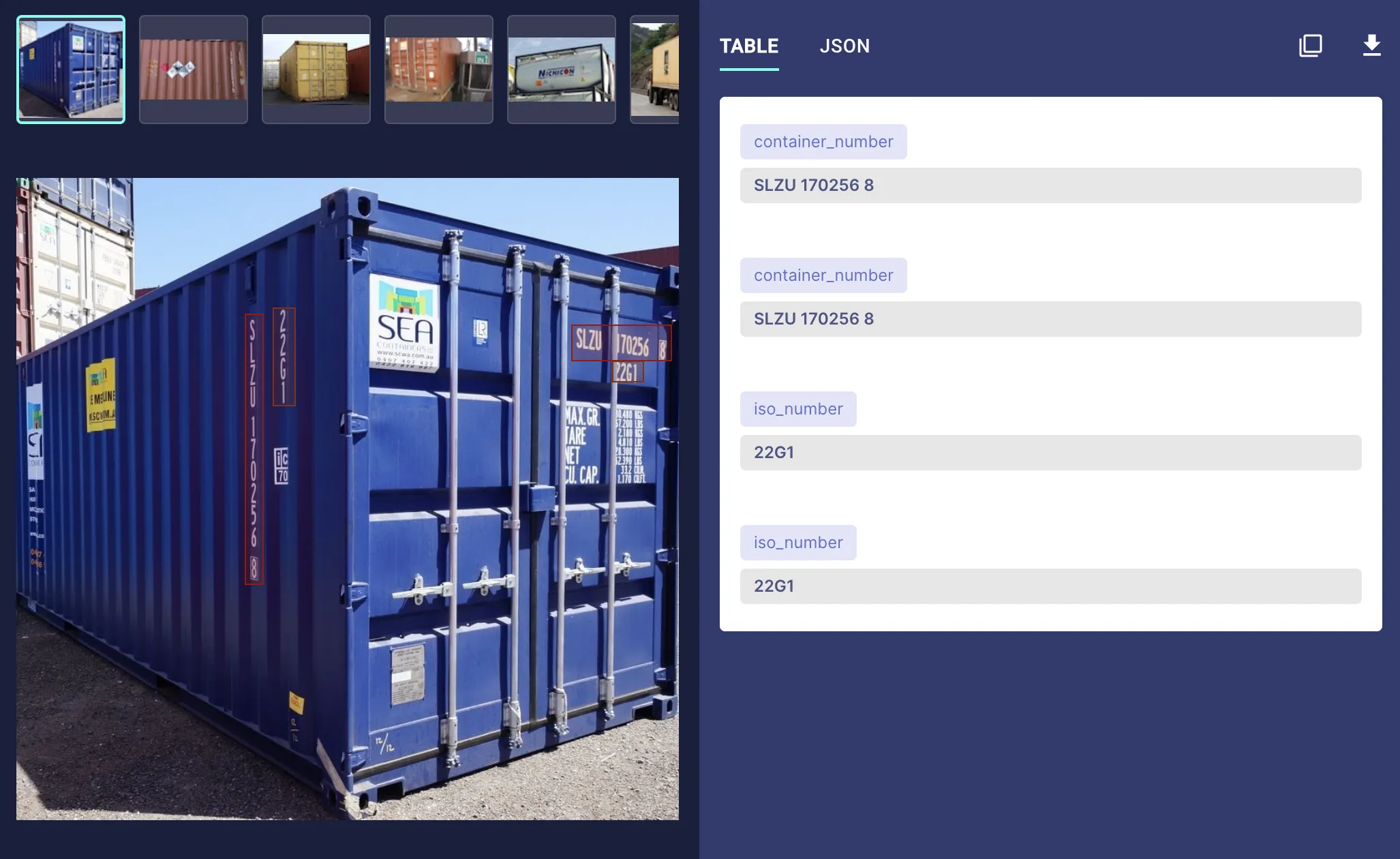
Container Code Recognition System
Automatic container code reading system for logistics and port terminal management.

Barcode & QR Code Scanner System
Automatic barcode and QR code scanning system for warehouse and inventory management.
Interested in AI Vision for Your Organization?
Contact us for a free consultation and live system demo.