
Automatic Container
Code Recognition
AI system for automatic container number reading per ISO 6346 standard for port terminals and logistics operations.
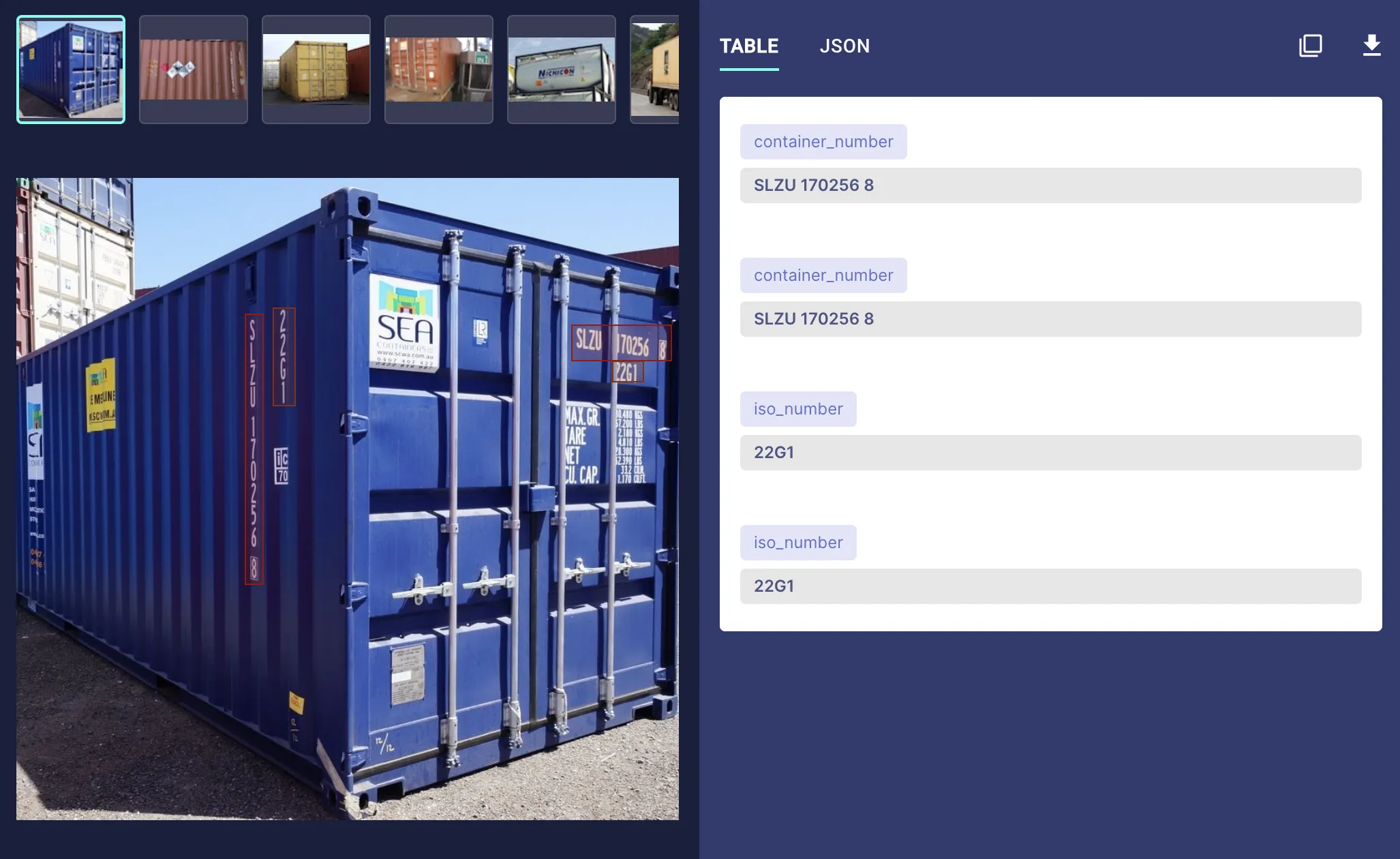
Usage Context and Data Preparation
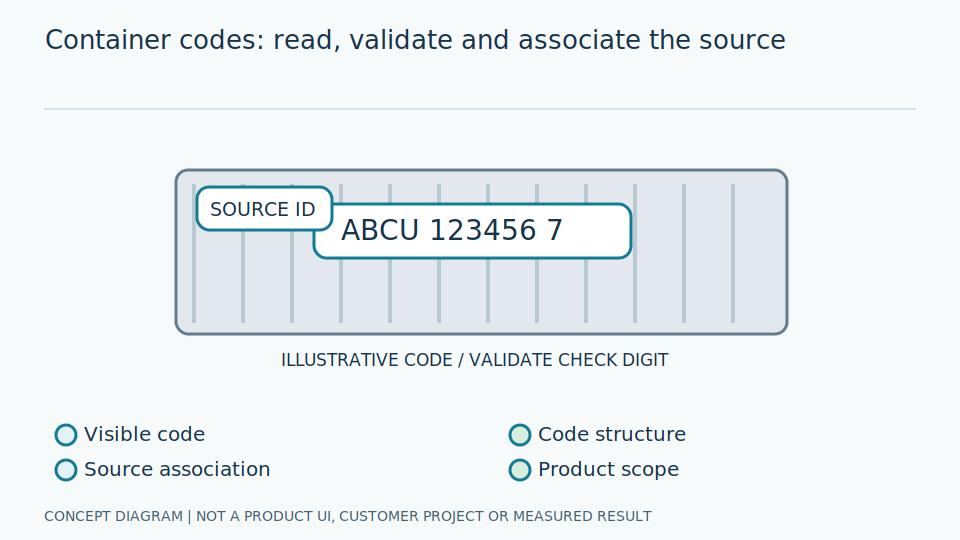
Container codes contain an owner code, equipment category, serial number and check digit as described in the existing features. Reading the code and validating its check digit address different checks. A valid format does not necessarily mean the container matches the intended shipment.
Prepare images from the actual crane, gate or forklift camera positions, together with sample codes and TOS/WMS reference records. Define what counts as one transaction and how images, times and positions are reviewed when searching for a record or correcting an incomplete code.
ISO 6346 describes container-code structure and supports format checking; mentioning it does not certify this product. Preserve the complete required characters and distinguish the identifier from surrounding text such as weights and other markings on the container wall.
Check digits detect some error patterns, not every OCR error or a match to shipment records. Compare reference records and actual events. Failed or incomplete codes need review; do not alter characters merely to satisfy a checksum without image evidence.
Site images may contain rust, paint damage, vertical text and structural obstructions. Select views from the actual handling sequence. Multiple views must be associated with the same container, not neighboring containers or separate transactions occurring close in time.
TOS/WMS integration needs transaction identity, reading point, time and review ownership. One container appears at several workflow stages, so its code alone cannot deduplicate events. Human corrections should preserve original readings and reasons within the agreed traceability scope.
Evaluate complete-code accuracy and transaction association. Distinguish incomplete visibility from recognition errors, and group results by angle, character condition and layout. Valid format alone is insufficient because a correct-looking code can still be attached to the wrong transaction.
Multiple-side reading, shipment verification and evidence-review workflows require proposal confirmation and trials with actual systems. Container-code reading does not establish internal contents, seal integrity or customs status; those conclusions need separate evidence and responsible procedures.
Key Features
ISO 6346 Compliant
Read complete container codes: Owner Code, Equipment Category, Serial Number, and Check Digit.
Auto Detection
Detect containers from cameras mounted on cranes, gates, or forklifts.
Check Digit Validation
Automatic check digit verification to eliminate errors.
TOS/WMS Integration
Direct integration with Terminal Operating Systems and Warehouse Management Systems.
Transaction History
Log every transaction with photos, timestamps, and positions for historical search.
All-Weather Operation
Operates in all conditions — day, night, rain, and bright sunlight.
Scroll the diagram horizontally to inspect all details.
Key Benefits
90% Time Reduction
From 30 seconds manual entry to 1 second automatic.
Error Elimination
No more typos or miskeyed data — prevents container mix-ups.
Increased Throughput
Handle growing container volumes without adding staff.
Real-time Tracking
Track containers from gate-in to gate-out instantly.
Technical Specifications
| Item | Specification |
|---|---|
| Accuracy | > 98% |
| Read Speed | < 1 second |
| Standard | ISO 6346 |
| Max Vehicle Speed | 30 km/h |
| Supported Cameras | IP Camera 5MP+ |
| Integration | REST API, TCP/IP, MQTT |
Suitable For
Related articles and knowledge
Vision AI Knowledge Library
Start with image interpretation, event information and evidence-backed retrieval.
Read MoreDetection and Event Indexing
Define identifiers, time, attributes and data lifecycle before choosing an index.
Read MoreNatural-Language Search
Separate objects, attributes, relationships and questions requiring confirmation.
Read MoreHybrid and Multimodal Retrieval
Combine filters and vectors without assuming similarity proves every condition.
Read MoreSearch Evaluation and Governance
Evaluate relevance, evidence, permissions and information missing from an index.
Read MoreRelated Content

Face Detection & Recognition System
AI-powered face detection and recognition system for access control and security.

License Plate Recognition (LPR) System
Automatic license plate reading system for parking management and vehicle access control.

Barcode & QR Code Scanner System
Automatic barcode and QR code scanning system for warehouse and inventory management.
Interested in AI Vision for Your Organization?
Contact us for a free consultation and live system demo.